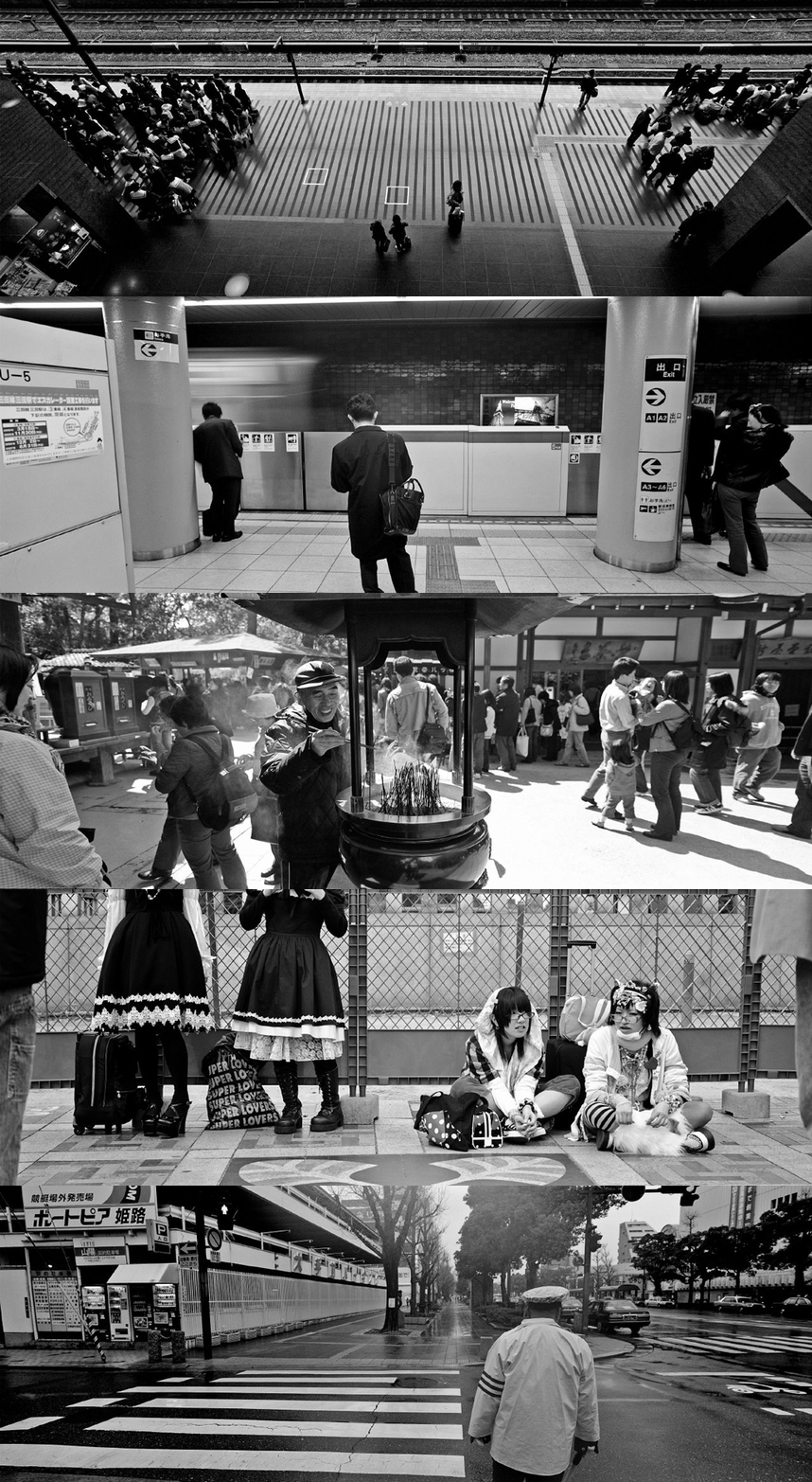
The Hasselblad Xpan Click here for the Xpan Photographer Profiles |
||||
 |
||||

|
||||
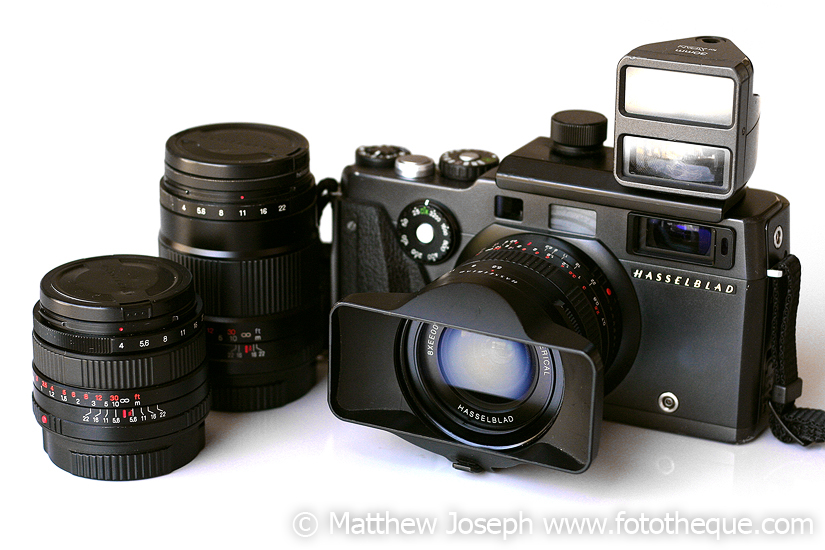
Hello there and welcome to my little tribute page to what I consider to be one of the best cameras in the world, the Hasselblad Xpan. This page has been up for almost 10 years now. The original version of this page received a lot of hits until it disappeared sometime in 2005, version two soon followed and stayed strong for a couple of years, in 2009 I updated it again and now in 2013 we are up to version four! I am still not a writer or reviewer or web designer, I’m barely even a photographer, nor am I getting cheques from Hasselblad (yet!) I just want to tell everyone about my fondness for this unique and fantastic camera. |
||||
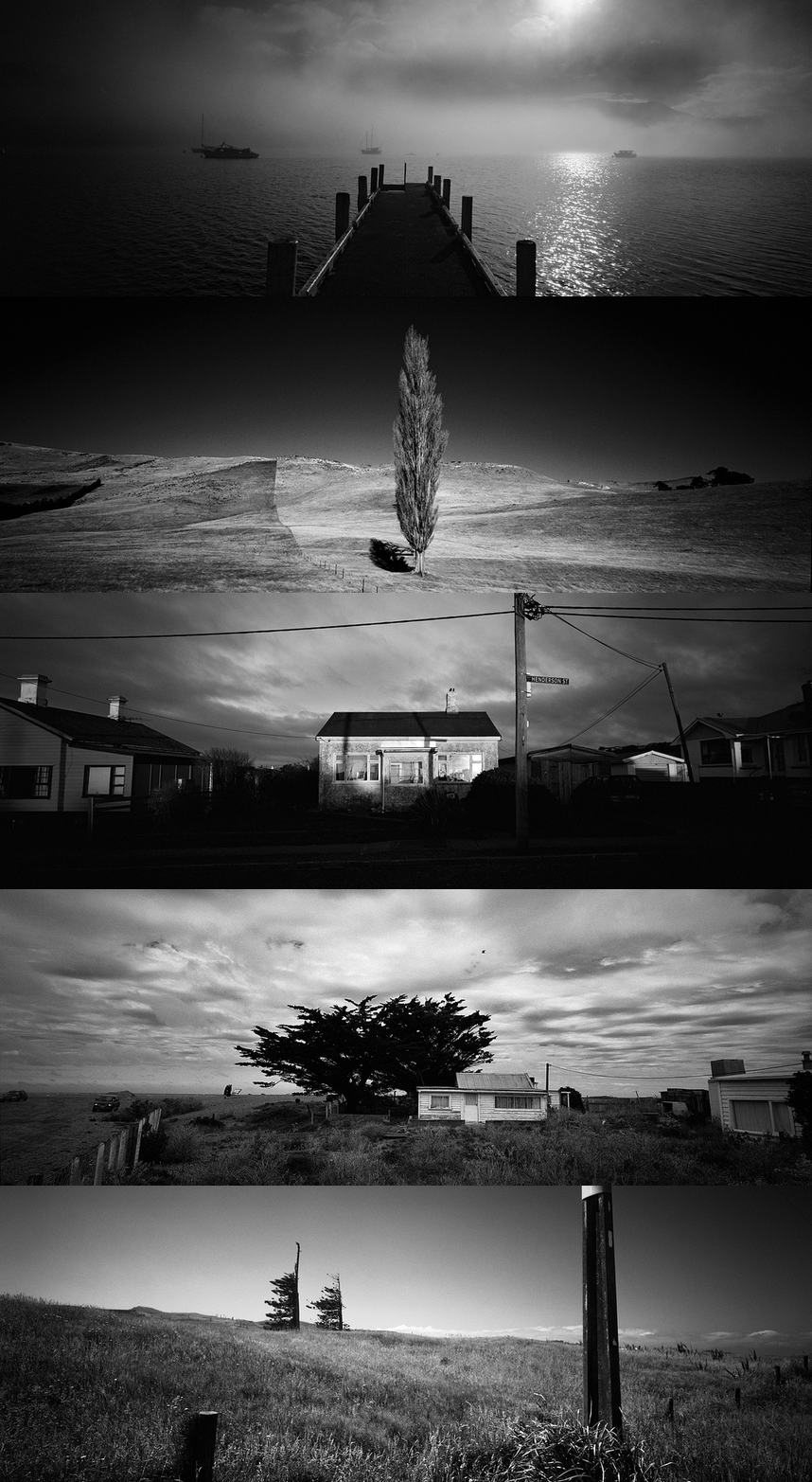 Here are some of my favourite images taken in New Zealand. Click on the image to go to my New Zealand Xpan gallery. |
||||
The Xpan was introduced by Hasselblad at Photokina, in Germany in 1998, I first found out about it sometime in 1999 and I wanted to own one from that moment on. In early 2004 I finally got the funds and the balls to buy one, so I did it and I have never regretted it. It came with the standard 45mm lens and belonged to a camera collector who had only put a couple of films through it, a little while later I bought the 90mm lens and in early 2006 I bought the 30mm lens. I have since sold the 90mm lens because I only used it a couple of times in the years that I had it, hardly use the 45mm lens anymore also. |
||||
|
||||
I get a lot of emails from people asking me about the camera and how it functions so I'll do so briefly here. It's a rangefinder camera which means it doesn't use a mirror and a prism to focus like a SLR, it uses a dual viewfinder which is coupled to the lens, so when the two images in the viewfinder and lined up it is focused. Most of the time though I use hyperfocal focusing which means after determining a suitable aperture and shutter speed I set the infinity point on the lens to that aperture, make sure the subject is within the range of focus and shoot. |
||||
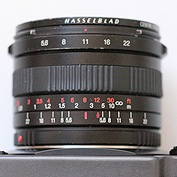 Here you can see that the aperture of the lens is set to F11 and the infinity mark on the focusing ring is set to F11 (on the right) as well, now look at the F11 on the left, this shows that everything from about 1.3m to infinity will be in focus. |
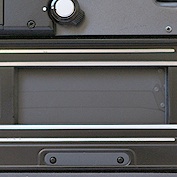 Here you can see the dimensions of the Xpan frame, it's almost twice the length of a normal 35mm frame. At the top of the image you can see the switch that changes between the two mode. |
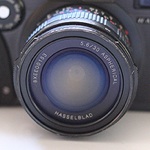 Here you can see the centre filter attached to the front of the 30mm lens, you lose a stop and a bit of light but it's essential if you want an evenly exposed image. |
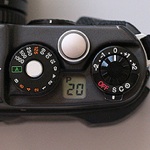 The left had dial is where you set the shutter speed or to A. The silver button at the top is the shutter button. The dial on the right is the on/off switch, single or continuous shutter setting, self-timer and exposure compensation. The LCD displays the remain frames. |
|
The negative (or positive) size created by the Xpan is 24x65mm which, of course, is a panoramic in dimension and this is created on regular 35mm film. It also has a regular 24x36 mode and it is switchable between these two modes as many times as you like on a roll of film, except when there is only space for one 24x36 mm frame left on the roll. There is a special place in Hell for people who shoot regular sized frames on this camera, if you want to shoot, go buy a SLR you heathens. Back in the early days in New Zealand it used to be quite difficult to get Xpan films printed and scanned, but now most major photo labs should be able to handle them easily, all you need to do is ask. Some care needs to be taken when sleeving the film, be sure to write on your film packed DO NOT CUT, LEAVE WHOLE. In 2007 I bought an Epson V700 flatbed scanner to scan my Xpan films with, second best thing I ever did, first being buying the Xpan. Lately I have been using a modified 6x7 film carrier for the Fuji SP-3000 at work, re the only lenses available for the camera. Some people get a little confused about the focal lengths of the lenses so I works good on B&W films, not so good on colour. |
||||
As I touched on earlier at one stage I had all three lenses for the Xpan, the 45mm, the 90mm and the 30mm, they are the only lenses available for the camera. Some people get a little confused about the focal lengths of the lenses so I will try to explain it a little. The 45mm is a 45mm in the regular 24x36mm mode but in the panoramic 24x65mm mode it has the equivalent focal length of a 24mm lens, the 90mm lens becomes a 50mm lens and the 30mm becomes a 17mm lens. Click here if you would like to see a comparison of some lenses and the 30mm Xpan lens. None of the lenses could be considered fast, but have you looked at what Canon is offering lately? They are all f4 except for the 30mm which is f5.6. They become slower still when you use the lens corrections filters, essential for an evenly exposed image, but not so essential for an interesting looking black & white image. I haven’t used a lens correction filter on any of my lenses since 2009. |
||||
The camera itself is extremely sturdy, it is very well built and has a good weight to it, it also feels well balanced to hold and is an absolute pleasure to use. It is a rangefinder, so it takes a little getting used to, you eventually learn what the lens captures compared to what you see in the viewfinder, which is often more. I mostly use the camera in aperture priority mode, I set the aperture on the lens and it selects the shutter speed to suit. The shutter speed is displayed on the back on the camera on the LCD, some people consider this a flaw but you quickly get used to it. Also if you’re like me and using the 30mm with the external viewfinder all the time, it’s great not to have to use the built in viewfinder. Hasselblad “fixed” this in 2003 by displaying the shutter speed in the viewfinder of the Xpan II, plus a couple of other minor adjustments. |
||||
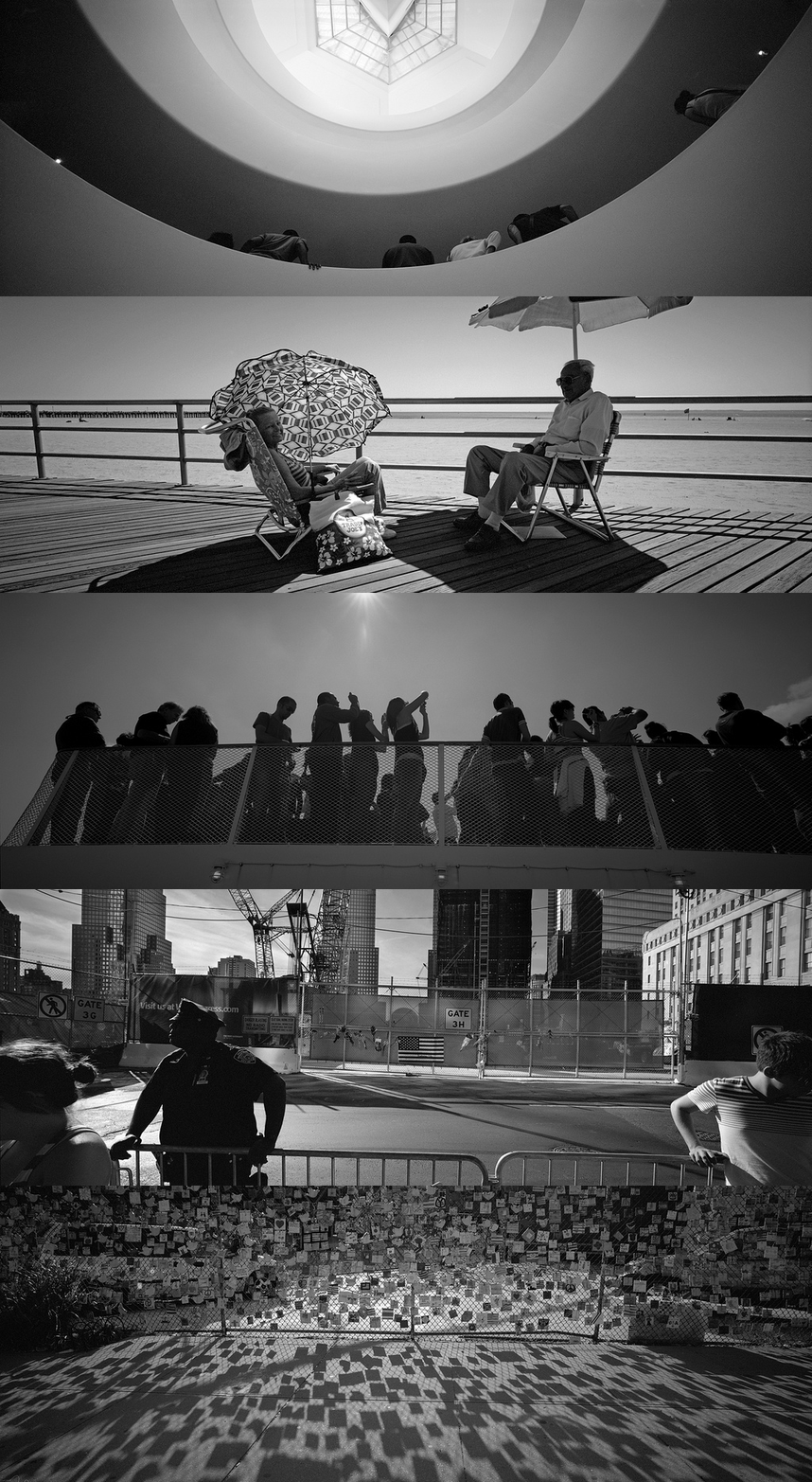 Here are some of my favourite images taken in the USA. Click on the image to go to my USA Xpan gallery. |
||||
So that’s about all I have to say, I have owned the camera for 9 years, I'll be completely honest with you, it’s not my favourite camera, it actually shares that position with my newly acquired Mamiya 7. I hoped you enjoyed reading my little spiel about the Hasselblad Xpan, actually my only hope is that someone reads it! and I'm sure someone will. If you were thinking about getting one of these great cameras, I hope it has convinced you just that little bit more to get one, you won't regret it. If you need anymore convincing, please check out my Xpan gallery. Cheers, Matthew Robert Joseph aka Fotodudenz Click here for the Xpan Photographer Profiles |
||||